How to Set Up Your First Aquarium: A Beginner’s Guide
Setting up your first aquarium can be an exciting and rewarding experience. Watching colorful fish swim through a beautifully decorated tank can bring life and calmness to your home. However, creating a healthy aquarium requires more than simply adding water and fish.
If you’re a beginner, this guide will walk you through everything you need to know to set up your first aquarium properly.
1. Choose the Right Aquarium
Start by selecting an aquarium that suits your space, budget, and experience level.
For beginners, a larger tank is often easier to maintain because water conditions tend to be more stable. A tank of around 20 gallons (75 liters) or more can be a good starting point.
Consider:
- Available space in your home
- Number and type of fish you want
- Your budget
- Maintenance requirements
- The weight of the aquarium when filled
Always place your aquarium on a sturdy, level stand designed to support its weight.
2. Choose the Right Equipment
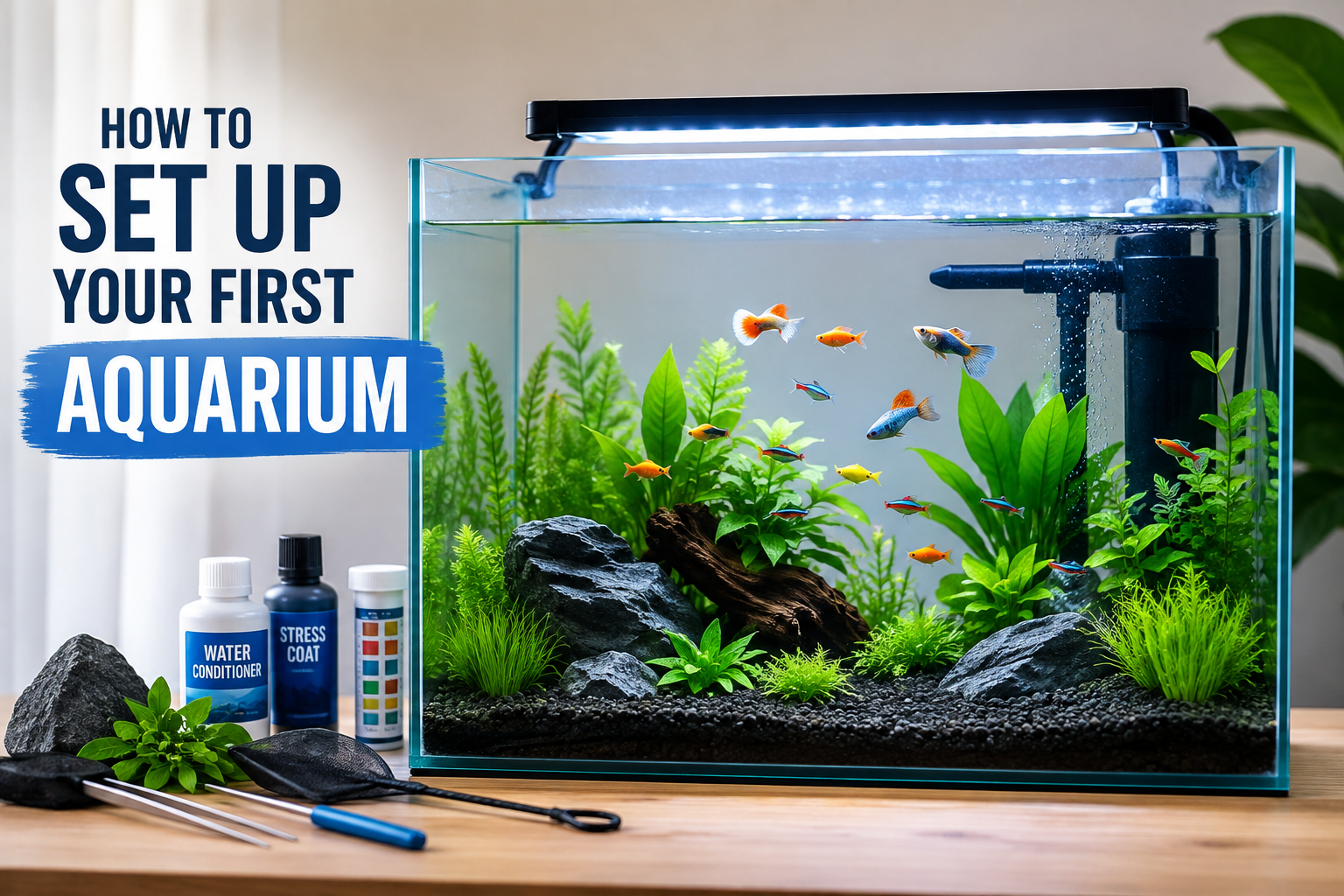
Before bringing fish home, make sure you have the essential aquarium equipment.
Basic aquarium equipment includes:
- Aquarium tank
- Aquarium filter – keeps the water clean and supports beneficial bacteria
- Heater – important for tropical fish
- Thermometer – helps monitor water temperature
- Aquarium light – provides illumination and supports live plants
- Substrate – such as aquarium gravel or sand
- Water conditioner – makes tap water safer for fish
- Fish net
- Aquarium test kit – helps monitor water parameters
You don’t necessarily need the most expensive equipment. Focus on buying reliable equipment that is appropriate for your tank size and fish.
3. Clean the Aquarium and Decorations
Before setting up the tank, rinse the aquarium, gravel, rocks, and decorations with clean water.
Never use soap or household cleaning chemicals, as residues can be harmful to fish.
If you’re using gravel, rinse it thoroughly until the water runs mostly clear. Place it gently at the bottom of the aquarium.
You can then arrange rocks, plants, caves, driftwood, and other aquarium decorations to create a natural-looking environment.
4. Add the Substrate and Decorations
Spread the gravel or sand evenly across the bottom of the tank.
You can create a slightly deeper layer toward the back of the aquarium to give it more depth. Leave enough open swimming space for your fish.
When adding decorations, make sure they are aquarium-safe and don’t have sharp edges that could injure your fish.
If you’re adding live plants, research their individual requirements for lighting and nutrients.
5. Fill the Aquarium With Water
Slowly fill the aquarium with water to avoid disturbing the substrate.
Tap water usually contains chlorine or chloramine, which can be harmful to fish. Use an appropriate water conditioner according to its instructions before introducing aquatic life.
Don’t fill the aquarium completely to the very top. Leave some space between the water surface and the lid.
6. Install the Filter and Heater
Install the filter according to the manufacturer’s instructions and make sure it is operating correctly.
If you’re keeping tropical fish, install an appropriately sized aquarium heater. Use a thermometer to monitor the temperature rather than relying only on the heater’s setting.
The ideal temperature depends on the fish species you plan to keep, so research your chosen fish before setting the temperature.
7. Cycle Your Aquarium Before Adding Fish
One of the most important steps for beginners is cycling the aquarium.
A new aquarium does not initially contain enough beneficial bacteria to safely process fish waste. During the nitrogen cycle, beneficial bacteria develop and help convert toxic ammonia into less harmful substances.
A fishless cycle is generally the safer approach for a new aquarium.
Use an appropriate source of ammonia and regularly test the water for:
- Ammonia
- Nitrite
- Nitrate
- pH
Avoid adding fish simply because the water looks clear. Clear water does not necessarily mean the aquarium is biologically ready.
The cycling process can take several weeks, so patience is important.
8. Choose Fish Carefully
Once your aquarium is properly cycled, it’s time to choose your fish.
Don’t choose fish based only on appearance. Consider:
- Adult size
- Water temperature requirements
- Temperament
- Compatibility with other fish
- Required tank size
- Swimming space
- Feeding requirements
Avoid overcrowding the aquarium. Adding too many fish can quickly lead to poor water quality and stress.
A good beginner aquarium should be stocked gradually rather than all at once.
9. Introduce Your Fish Slowly
When you bring your fish home, don’t immediately pour them into the aquarium.
Instead, allow the fish to gradually adjust to the aquarium’s temperature and water conditions. Follow an appropriate acclimation method for the species and avoid adding transport water unnecessarily.
After introducing the fish, keep an eye on their behavior and water parameters during the first few days.
10. Feed Your Fish Properly
Overfeeding is one of the most common mistakes new aquarium owners make.
Give your fish only as much food as they can reasonably consume in a short period. Remove uneaten food if necessary.
Choose food specifically designed for the species you’re keeping.
A varied and species-appropriate diet can help support healthy growth and coloration.
11. Maintain Your Aquarium Regularly
Setting up an aquarium is only the beginning. Regular maintenance is essential for keeping your fish healthy.
Your routine may include:
- Testing water parameters
- Performing partial water changes
- Cleaning algae when necessary
- Checking the filter
- Removing debris
- Monitoring fish behavior
- Checking equipment
- Trimming live plants
Avoid completely replacing all the aquarium water or washing filter media with untreated tap water, as this can disrupt beneficial bacteria.
12. Watch Your Fish for Signs of Stress
Healthy fish are generally active and behave normally for their species.
Keep an eye out for unusual signs such as:
- Loss of appetite
- Unusual swimming
- Hiding constantly
- Rapid breathing
- Damaged fins
- White spots or unusual marks
- Sudden changes in behavior
If something seems wrong, check your water parameters first. Poor water quality is a common cause of problems in aquariums.
Common Beginner Mistakes to Avoid
Here are some mistakes you should try to avoid when setting up your first aquarium:
❌ Adding fish before cycling the tank
Give beneficial bacteria time to establish.
❌ Overfeeding fish
Extra food can contribute to poor water quality.
❌ Overstocking the aquarium
More fish means more waste and greater maintenance requirements.
❌ Using soap to clean aquarium equipment
Chemical residues can be dangerous to aquatic life.
❌ Skipping water testing
Water can look clean while still containing harmful levels of ammonia or nitrite.
❌ Buying fish without checking compatibility
Different species have different environmental and behavioral needs.
Final Thoughts
Setting up your first aquarium doesn’t have to be complicated. The key is to plan ahead, choose the right equipment and fish, cycle the aquarium properly, and maintain good water quality.
Most importantly, don’t rush the process. A little patience in the beginning can help you create a healthier environment for your fish and make aquarium keeping much more enjoyable.
Whether you’re interested in colorful tropical fish, peaceful community tanks, or planted aquariums, starting with the right knowledge will help you build an aquarium that both you and your fish can enjoy.
Happy fish keeping! 🐠🌿