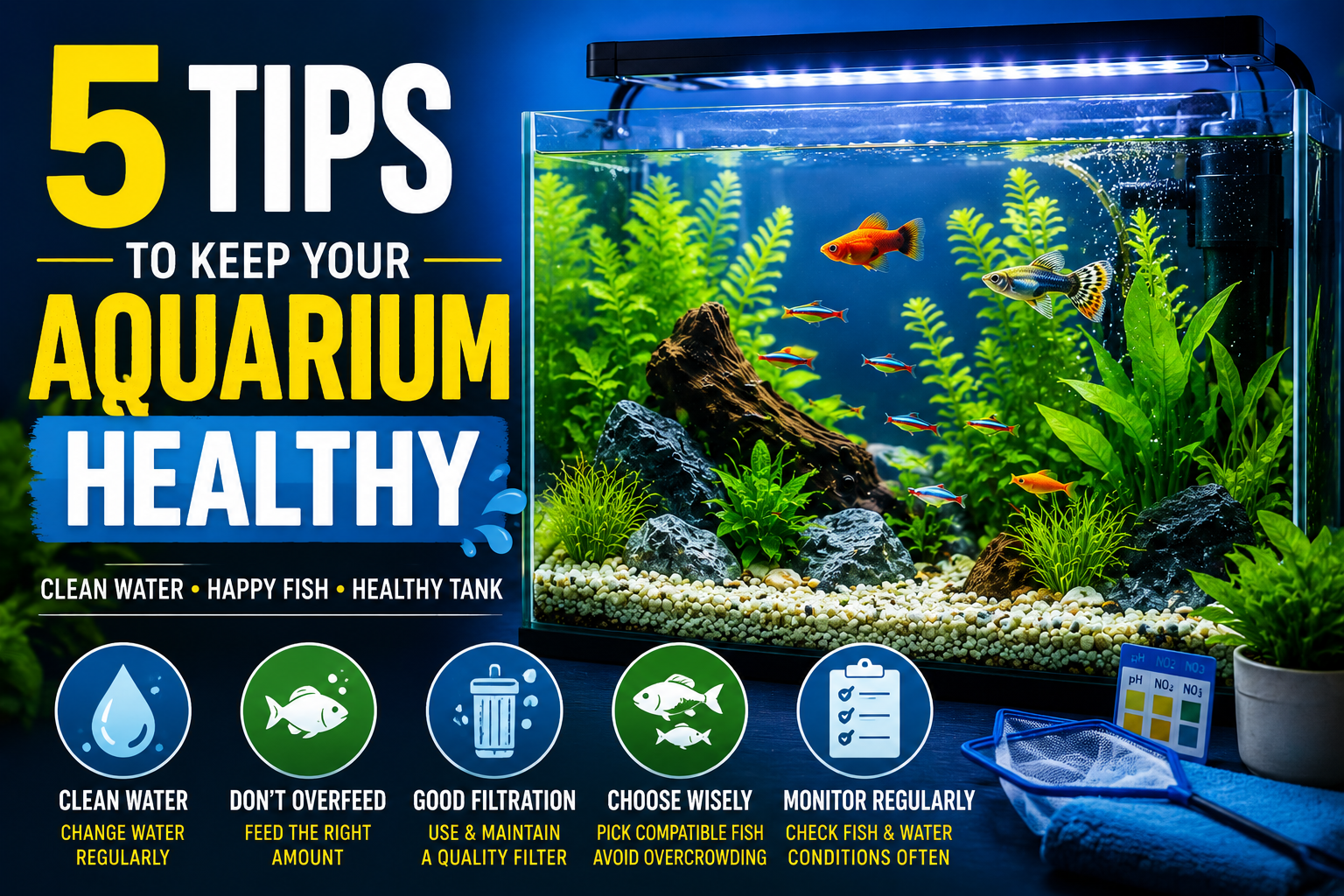
5 Tips to Keep Your Aquarium Healthy
A beautiful aquarium is more than just colorful fish and decorations—it is a small ecosystem that needs regular care and attention. Keeping the water clean, providing the right food, and creating a suitable environment can help your fish stay healthy and active.
Whether you’re a beginner or an experienced fish keeper, these 5 simple tips can help you maintain a healthy aquarium.
1. Keep the Water Clean
Clean and stable water is one of the most important factors in keeping fish healthy.
Fish waste, uneaten food, and decaying plants can contribute to poor water quality. Your aquarium filter helps remove waste, but regular partial water changes are still important.
For many established freshwater aquariums, changing around 20–30% of the water once a week is a useful starting point. However, the ideal schedule depends on your aquarium’s size, fish population, plants, filtration, and water-test results.
Remember:
- Use an appropriate water conditioner for tap water.
- Avoid sudden changes in water temperature.
- Remove visible waste and debris.
- Test your water regularly.
Tip: Clear water doesn’t always mean healthy water. Testing parameters such as ammonia, nitrite, nitrate, and pH can give you a better idea of your aquarium’s condition.
2. Don’t Overfeed Your Fish
One of the most common aquarium mistakes is giving fish too much food.
Uneaten food eventually breaks down and can contribute to poor water quality. Overfeeding can also contribute to health and water-quality problems.
Feed your fish an appropriate amount based on their species and dietary requirements. Watch how much they actually consume and avoid adding extra food simply because they appear interested in feeding.
A good feeding routine:
- Use food designed for your fish species.
- Feed an appropriate portion.
- Remove excessive uneaten food when necessary.
- Avoid feeding more just because fish are begging.
Remember: More food doesn’t necessarily mean healthier fish.
3. Use a Good Aquarium Filter
Your aquarium filter plays an important role in maintaining water quality.
A good filter helps remove particles and provides a surface where beneficial bacteria can live. These bacteria are an important part of the aquarium’s biological filtration system.
When choosing a filter, make sure it is appropriate for your aquarium’s size and the needs of your fish.
Filter maintenance tips:
- Check the filter regularly.
- Make sure water is flowing properly.
- Clean filter components according to the manufacturer’s instructions.
- Avoid replacing all biological filter media at once unnecessarily.
- When cleaning biological media, use removed aquarium water rather than untreated tap water when appropriate.
A well-maintained filter can help create a more stable environment for your fish.
4. Choose the Right Fish and Avoid Overcrowding
Not every fish is suitable for every aquarium.
Before buying fish, research their adult size, behavior, temperature requirements, water preferences, diet, and compatibility with other species.
Overcrowding can increase waste production and make it harder to maintain good water quality.
Before adding a new fish, ask:
- Is my aquarium large enough?
- Is this fish compatible with my existing fish?
- Does it require similar water conditions?
- Does it need to live in a group?
- Will it become too large for my aquarium?
- Can my filtration system handle the additional waste?
Tip: Stock your aquarium gradually rather than adding too many fish at once.
5. Monitor Your Fish and Aquarium Regularly
Regular observation can help you notice problems before they become serious.
Spend a few minutes each day watching your fish. Get familiar with their normal swimming, eating, and social behavior.
Watch for signs such as:
- Loss of appetite
- Unusual swimming
- Constant hiding
- Rapid breathing
- Damaged or clamped fins
- Unusual spots or marks
- Sudden changes in behavior
Also check your aquarium equipment regularly. Make sure the filter, heater, lights, and air pump—if used—are working properly.
If your fish suddenly behave differently, checking the water parameters is a good first step.
Bonus Tip: Don’t Rush Your Aquarium
A healthy aquarium takes time to establish.
If you’re setting up a new tank, allow the aquarium to properly cycle before adding fish. The nitrogen cycle allows beneficial bacteria to establish and helps the aquarium process fish waste.
Patience is one of the most important skills for a successful fish keeper.
Simple Aquarium Care Checklist
Daily 🐠
- Observe your fish
- Check equipment
- Feed an appropriate amount
- Remove obvious uneaten food if necessary
Weekly 💧
- Check water quality
- Perform a partial water change as needed
- Remove debris
- Inspect the filter and other equipment
Regularly 🌿
- Clean algae when necessary
- Trim plants
- Check fish compatibility before adding new inhabitants
- Monitor nitrate and other water parameters
Final Thoughts
Keeping an aquarium healthy doesn’t have to be difficult. The key is consistent care and good habits.
By keeping the water clean, feeding responsibly, maintaining your filter, avoiding overcrowding, and monitoring your fish, you can create a healthier and more stable environment.
Remember, every aquarium is different, so adjust your routine according to your fish species, tank setup, and water-test results.
Healthy aquarium, happy fish! 🐠💧🌿